
Here at The Babbling Brook, we are no strangers to technology. We maintain the Willow Brook website, create social media posts, videotape events, take digital photographs, use various computer and design programs, send group e-mails and texts, and of course, produce this blog each week. We also each own smartphones, computers, and other devices, like smart TVs, which require at least a modicum of technological fluency.
This got us to thinking about technology in our society and how it has so dramatically changed our world in such a short time. For example, members of Generation Z (born between 1997-2012) have practically grown up with technology, while members of Generation X (born between 1965-1980) had to change the TV channel with the dial on the television (with only 13 channels!) and made calls via rotary telephones.
Whether you love the changes or not, technology is here to stay. Our world continues to evolve. Life is digital. We can shop online, book vacations and plane tickets, work without ever stepping into a brick and mortar office, take college classes, even control our home’s temperature and security from a country away—all from a computer or other electronic device. It’s astounding to think that only 100 years ago, in 1922, the top advancements of the day were convertibles (automobiles), water skis, the traffic light, and the electric blender.
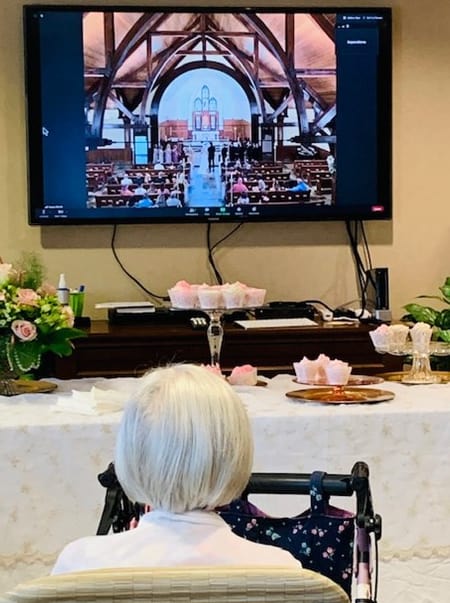
One of our residents at Willow Brook at Delaware Run was unable to attend her granddaughter’s wedding in person. So Willow Brook brought the wedding to her and her neighbors via Zoom. Everyone dressed up and enjoyed cupcakes and beautiful table decorations as well.
Technology, like anything else, has its plusses and minuses. Throughout the pandemic, technology has been a lifeline: it has been a means of connection when our options for connecting were severely limited. Technology has certainly created online communities that have been life-giving for many, but technology has also made building authentic relationships more difficult. We can go years without ever knowing our neighbors. We may know the name of our insurance agent, but have never seen her in person or had a face-to-face conversation with her. And, we are much less likely to come into contact with people who are different than we are, leaving us disconnected from some of the hard realities of life.
At Willow Brook, staff and visitors continue to sign into our campuses on iPads. Our aides still set up Zoom calls for residents and their family members, and our activity directors livestream events, entertainment, and worship services. We continue to send out notifications to staff, residents, and family members via e-mail and text message. Honestly, these things have become so ingrained in our operations, they will likely continue for the foreseeable future. Technology allows us to refill a prescription from the phone or an app, have food delivered to our door, and take part in a worship service or webinar when we cannot attend in person or it is isn’t safe to do so. These are all good things.
So what do we do when technological fluency does not come so easy? For example, at Willow Brook, we often have residents who struggle with television remotes—long gone are the days of on/off, channel, and volume. Now our elders often have to use multiple remotes for a single television, struggle to read the fine print on the buttons, and try to figure out the difference between power, cable, and input.
Telephones were once used only to make and receive phone calls, but no longer. Now, cell phones and smartphones, with options for text messaging, downloading “apps,” getting on the Internet, and sending e-mails are often more than our seniors bargained for.
Computers and tablets, too, can be trying. Dealing with a multiplicity of usernames and passwords, scam e-mails and popups, and trying to find correct websites can be overwhelming. And how do you even turn on some of these gadgets, let alone use something called a stylus?

One thing we’re working toward at Willow Brook is to provide basic training sessions at all of our campuses that will walk through some of these daily technology issues and give our residents the knowledge and confidence to be able to manage these things in their own homes. We would also provide a written how-to guide in a large font for easy future reference. We welcome feedback from residents and their families about the need for such training—do you think you, or someone you love, would benefit from such instruction?
One thing we know for sure is that even though we may seek simplicity in our lives—having gratitude for the small things, getting our hands in the dirt, shedding possessions, or consuming less—technology will not stop. It will continue to be a part of our lives in some way, shape, or form. We must do the best we can to adapt if we wish to remain connected.

Willow Brook Christian Communities
100 Delaware Crossing W.
Delaware, Ohio 43015
Phone: 740-721-3382


55 Lazelle Rd.
Columbus, Ohio 43235
Phone: 614-885-3300

100 Willow Brook Way S.
Delaware, Ohio 43015
Phone: 740-369-0048

100 Delaware Crossing W.
Delaware, Ohio 43015
Phone: 740-201-5640